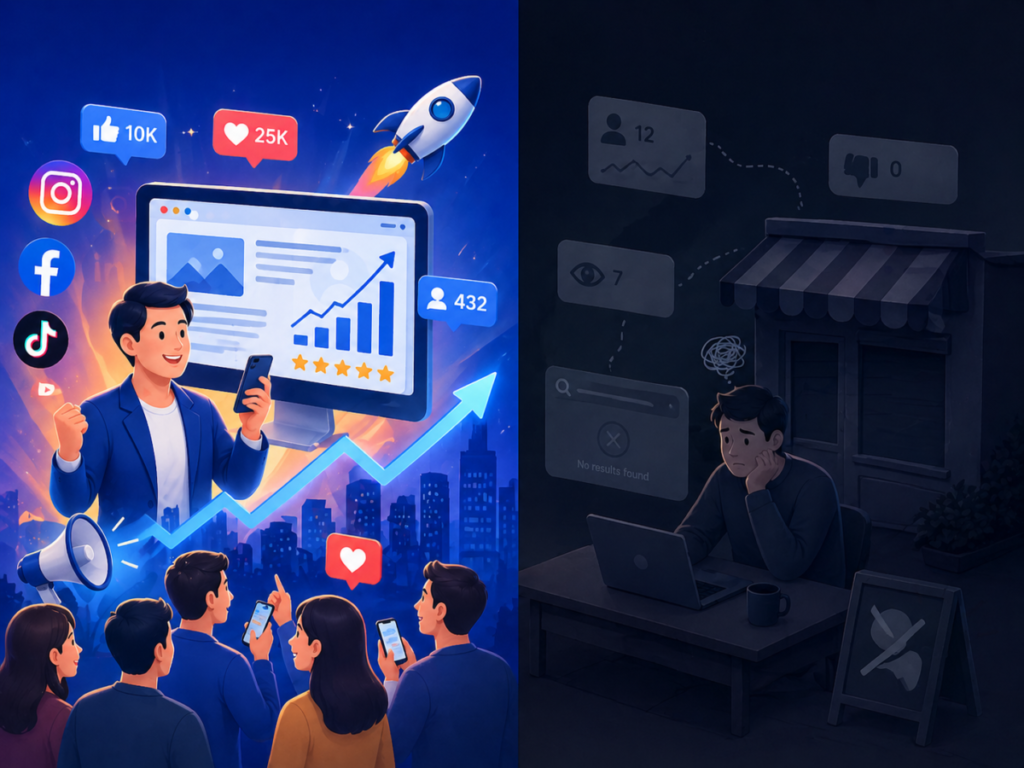

In today’s digital landscape, being online is no longer enough. Almost every business has a website, social media account, or some form of digital presence. Yet, only a small percentage of them truly stand out and dominate their market. The rest remain invisible, struggling to gain attention despite consistent effort. As a writer observing how brands grow in the digital space, I often notice that the difference is not effort, but strategy.
Many businesses believe that simply being active online will eventually bring results. They post regularly, run occasional ads, and update their websites. However, visibility is not built through activity alone. It is built through clarity, consistency, and connection. Businesses that understand this are the ones that rise above the noise.
The Illusion of Being “Online”
One of the most common misconceptions is that having a website or social media presence automatically means a business is visible. In reality, this is only the starting point. The digital space is crowded, and users are constantly exposed to content from multiple sources.
Being online does not guarantee attention. What matters is whether your presence is strong enough to be noticed. Many businesses fall into the trap of thinking that more posts or more platforms will solve the problem. In truth, without a clear direction, these efforts often go unnoticed.
Visibility requires intention. It requires understanding how your audience behaves and what makes them stop, engage, and remember.
Clarity of Brand Positioning
Businesses that dominate online usually have one thing in common. They know exactly who they are and who they are speaking to. This clarity allows them to communicate effectively and stand out in competitive markets.
Without clear positioning, a brand becomes generic. It tries to appeal to everyone but ends up resonating with no one. This is one of the main reasons why many businesses remain invisible.
A strong brand communicates its value clearly. It answers questions like what makes it different, why it matters, and who it is for. When this clarity is present, everything else becomes more effective, from content to advertising.
Consistency Builds Recognition
Recognition is not built overnight. It comes from consistent exposure over time. Businesses that dominate online understand the importance of showing up consistently with the same message, tone, and visual identity.
Consistency creates familiarity, and familiarity builds trust. When users repeatedly see the same brand in a cohesive way, they begin to remember it. This increases the chances of engagement and conversion.
On the other hand, inconsistent branding can confuse the audience. If a business looks and sounds different across platforms, it becomes harder to recognize and trust.
Consistency is not just about posting regularly. It is about maintaining alignment in everything you do.
Content That Connects, Not Just Exists
Content is one of the most powerful tools in digital marketing. However, not all content is effective. Many businesses create content simply to stay active, without considering its purpose.
Effective content connects with the audience. It provides value, solves problems, or evokes emotion. It speaks directly to the needs and interests of the target market.
Random content, on the other hand, often gets ignored. It lacks direction and fails to create impact. This is why some businesses post frequently but still struggle with low engagement.
Creating meaningful content requires understanding your audience and delivering messages that resonate with them.
Strategic Use of Channels
Another key difference between visible and invisible businesses is how they use digital channels. Successful brands do not try to be everywhere without a plan. Instead, they focus on the platforms that matter most to their audience.
They also ensure that all channels work together. Their website, social media, and advertising efforts are aligned and support each other.
For example, content on social media can drive traffic to a website, while the website converts visitors into customers. When these elements are connected, the overall strategy becomes more effective.
For a deeper understanding of how to strengthen your digital foundation, read also : Build a Strong Digital Presence with Smart Strategies.
The Role of User Experience
User experience plays a significant role in whether a business stands out or not. When users visit a website or interact with a brand online, their experience shapes their perception.
A clean, intuitive, and fast website creates a positive impression. It makes users feel confident and encourages them to explore further. On the other hand, a confusing or slow website can drive users away instantly.
First impressions matter, especially in the digital world where attention spans are short. Businesses that invest in user experience are more likely to retain visitors and convert them into customers.
Data Driven Decisions
Successful businesses do not rely on guesswork. They use data to guide their decisions. By analyzing performance metrics, they can understand what works and what does not.
This allows them to refine their strategies and improve results over time. Data provides insights into audience behavior, content performance, and campaign effectiveness.
Without data, businesses are essentially operating blindly. They may continue investing in strategies that are not delivering results.
Using data effectively requires consistency and a willingness to adapt.
Why Some Businesses Scale Faster
The businesses that dominate online are not necessarily the ones with the biggest budgets. They are the ones with the most effective systems.
They approach digital marketing as a long term strategy rather than a series of disconnected actions. Every element, from branding to content to user experience, works together toward a common goal.
This alignment allows them to scale more efficiently. Instead of starting from scratch each time, they build on a strong foundation.
In contrast, businesses without a clear system often struggle to maintain momentum. Their efforts may produce short term results, but they lack sustainability.
Conclusion
The difference between businesses that dominate online and those that remain invisible is not luck. It is strategy. It is the ability to move beyond simple activity and focus on meaningful, consistent, and aligned efforts.
In a digital environment where competition is constantly increasing, businesses need to be intentional about how they show up. From brand positioning to content strategy to user experience, every detail matters.
By focusing on clarity, consistency, and connection, businesses can transform their online presence from invisible to impactful.